

How TasteMatch Uses Formspree to Handle Data for Restaurant Discovery
We spoke with David Kilchenmann, founder of TasteMatch, about how his startup uses Formspree to collect user preference data and streamline their marketing operations.
David Kilchenmann
Founder, tastematch
The Quest for the Perfect Restaurant Match
David Kilchenmann’s startup TasteMatch, launched just a year and a half ago, solves a universal problem: staring at endless restaurant options while struggling to decide where to eat.
“We built an app that finds the perfect restaurant for you based on your tastes and preferences,” David explains. “Users download the app, take a picture-based quiz, and our algorithm matches them with restaurants they’ll love.”
What sets TasteMatch apart isn’t just the AI-powered matching — it’s their thoughtful approach to collecting preference data through an engaging, visual quiz that captures user responses for analysis and marketing.
The company has quickly evolved from prototype to sophisticated platform, built on React Native and Golang, running on AWS infrastructure. At its core lies something elegantly simple: well-designed forms that seamlessly capture user preferences.
The Data Collection Challenge
Building an effective recommendation algorithm requires understanding user preferences. For TasteMatch, the key challenge was collecting and managing this data effectively. Their picture-based quiz needed to capture responses and route them correctly for both analysis and marketing.
We needed a way to collect restaurant preferences through our web app prototype. The picture-based quiz generates submissions that we collect and analyze, while also feeding our marketing efforts.
The challenge wasn’t just collecting data. The real challenge was routing it efficiently to multiple destinations without burdening their small team.
From Typeform to Something Better
Before discovering Formspree, David’s team relied on standard solutions. “We were previously using Google Forms and Typeform,” he recalls.
Typeform is really nice as a question tool, but we needed something that would integrate seamlessly into our application.
The limitation wasn’t purely technical — it affected user experience. Forms that felt disconnected from their app disrupted the seamless experience they wanted to create. Users would start the quiz within TasteMatch only to feel like they were being redirected elsewhere.
When David’s CTO began researching alternatives, they sought something specific: a form solution that would blend invisibly into their application architecture.
The Integration That Just Works
What drew the TasteMatch team to Formspree was exactly what they’d been seeking: invisible complexity.
We loved the integration into our application. It was seamless. We also liked getting notifications via email, so we could stay on top of new submissions as they came in.
For a startup team that needs to move fast and iterate constantly, this seamless integration was essential. They didn’t want another dashboard to monitor or another tool to learn. They needed something that would work effortlessly within their existing workflow while they focused on their core product. And the transition to Formspree was so smooth it barely registered.
Building a Complete Data Pipeline
TasteMatch soon discovered that Formspree could serve as more than just a form handler. It became the central hub for their entire user data ecosystem.
“Our forms live on AWS, but the data needs to go multiple places,” David explains. “Submissions flow to our Mailchimp newsletter for marketing, we export data to Excel sheets for analysis, and we’re using Folk — which is like a Pipedrive competitor — for our CRM needs.”
This multi-destination approach means each quiz submission automatically flows to their marketing automation, analysis exports, and customer relationship management system. For a lean startup team wearing multiple hats, this efficiency is crucial for survival.
The beauty lies in the automation: users take the quiz, and their preferences instantly become available across all necessary systems, without manual intervention.
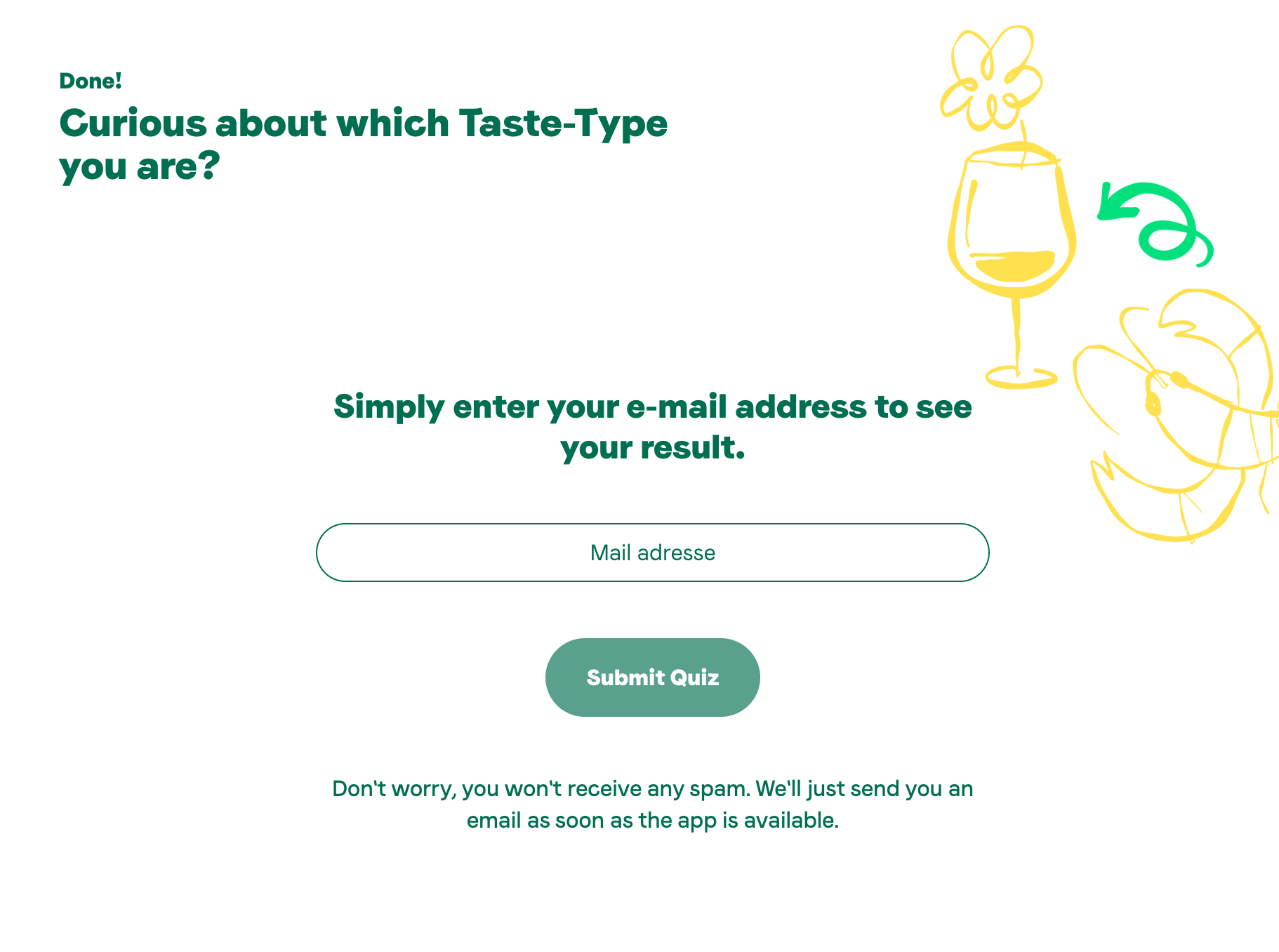 TasteMatch's Taste-Type Quiz is powered by Formspree
The Ultimate Startup Tool: Invisible Reliability
One telling aspect of TasteMatch’s experience with Formspree is how rarely the team thinks about it. David logs in “very infrequently,” usually just to check on users or search for specific submissions. His CTO is similarly hands-off: “If it works, it works.”
Their marketing team member, however, logs in regularly to access data for newsletters and campaigns. This natural division works perfectly — technical team members focus on product development while marketing independently accesses the data they need.
We’re not even really aware of spam filtering, which I guess means it’s working well.
David notes with a laugh. “When you don’t have to think about something in a startup, that’s usually a very good sign.”
This “set it and forget it” reliability is exactly what early-stage companies need. When building a product, there are enough things that need constant attention — form handling shouldn’t be one of them.
Dashboard Insights and Data Exports
Among Formspree’s essential features for TasteMatch’s operations, two stand out: the dashboard for monitoring user engagement and the export functionality for data analysis.
The dashboard gives us real-time visibility into user submissions, and the exports let us pull data for analysis. For a startup that’s constantly analyzing user behavior and preferences, easily accessing and exporting that data is crucial.
This data serves multiple purposes beyond Formspree. User preferences from their quiz inform their understanding of behavior, support marketing campaigns, and guide product development.
The export functionality has proven particularly valuable as they’ve grown. “We can pull data in different formats depending on what we’re analyzing,” David notes. “Sometimes we need it for our algorithm team, sometimes for marketing analysis. Having that flexibility is important.”
Scaling from Prototype to Platform
As TasteMatch transitions from web app prototype to full mobile application, Formspree remains their data collection backbone. Its reliability and integration capabilities provide stability during this critical evolution.
We’re moving to mobile, but our data collection and analysis needs are only growing. Having a form solution that scales with us, integrates well with our existing tools, and that our team can rely on — that’s exactly what we need during this transition.
The move to mobile doesn’t require rebuilding their data infrastructure. Instead, Formspree provides continuity, maintaining their proven data pipeline while everything else evolves.
Building Products, Not Infrastructure
David’s experience highlights a crucial point about modern startups: the best tools let you focus on your unique value proposition rather than solving already-solved problems.
When you’re building a startup, you want to focus on your core product, not on managing form infrastructure. Formspree lets us do exactly that — we can focus on matching people with great restaurants while knowing our data collection is handled reliably.
This philosophy guides all their tool choices. For TasteMatch, every decision comes down to whether it helps them build better restaurant recommendations or distracts from that mission.
The Recommendation
When asked what he’d tell other startup founders considering Formspree, David’s response is grounded in experience: “It’s a nice service, and not too expensive. If you want a good integration service for your app, to test things, for building products, it provides seamless integration.”
He pauses, then adds something that captures the startup experience: “Look for tools that integrate seamlessly with your existing stack and don’t require constant attention. You want to build your product, not manage your forms.”
For TasteMatch, Formspree embodies the ideal startup tool: powerful enough to handle their growing needs, simple enough to avoid slowing them down, and reliable enough to trust while focusing on what makes their company unique.
“We’re solving a complex problem with AI and user experience design,” David concludes. “Having one less thing to worry about — knowing our data collection just works — that’s invaluable when you’re trying to build something new.”
TasteMatch uses AI to help users discover restaurants that match their personal preferences through an innovative picture-based quiz system. Learn more about their restaurant discovery platform at tastematch.io.